Introduction
What translated pages mean for multilingual sites
Translated pages extend your reach without creating identical content in a single language. They open access to new audiences while preserving your core message in another tongue. Translation adds linguistic variation, not duplication in the eyes of search engines when signals are correct.
How hreflang and localization shape SEO understanding
Hreflang signals play a critical role in multilingual SEO fundamentals by informing search engines about the specific language and region a page is targeting. Properly implemented hreflang attributes help avoid misinterpretation of pages as duplicates, which is essential for maintaining the integrity of localized content. Additionally, effective multilingual SEO goes beyond mere translation; it requires thorough localization efforts, including conducting multilingual keyword research and applying technical SEO best practices for each language. These elements reinforce your website's value and significantly enhance its positioning in search engine results pages (SERPs).
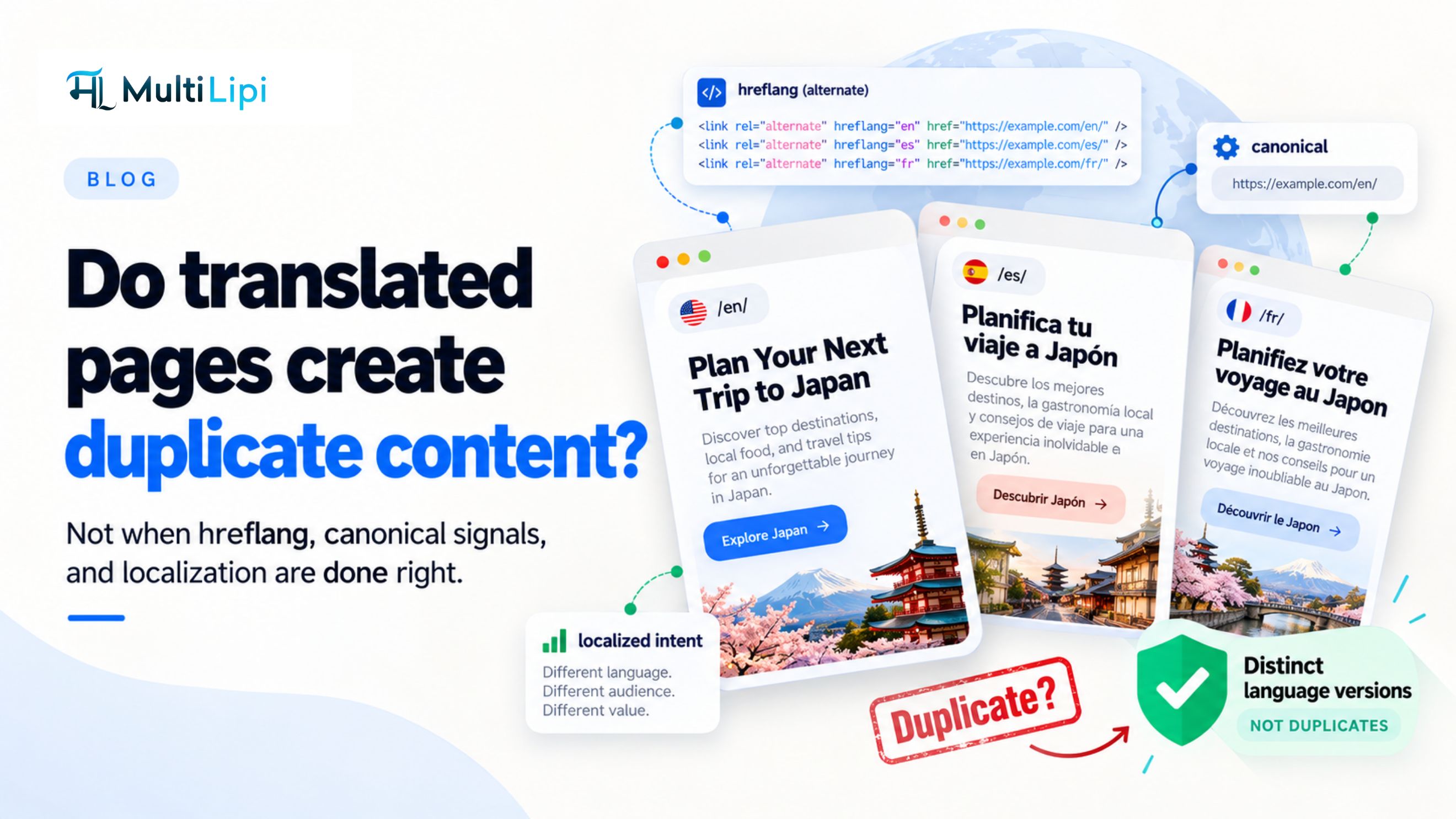
Translated pages do not automatically create duplicate content. When you translate for the intended audience, clear language signals and thoughtful localization help search engines recognize distinct language versions rather than copies.
Key practices include accurate hreflang annotations and regional targeting, canonical tags that do not override genuinely translated pages, and language-specific content that adds value beyond a word-for-word swap.
Here’s how to approach it effectively:
- Use hreflang tags correctly to indicate language and region (for example, hreflang="es-ES" for Spanish in Spain). This helps supported search engines surface the appropriate localized version; properly translated main content is not ordinarily considered duplicate content in the first place.
- Choose the right linking approach. Keep genuinely translated pages indexable with a canonical URL appropriate to their own language; connect alternate language versions with rel="alternate" hreflang tags. Reserve cross-URL canonicalization for truly duplicate or substantially similar pages rather than routinely pointing translations to the primary-language page.
- Invest in translation quality. Review translations for accuracy, local nuance, and usefulness. Machine translation is not inherently duplicate content, but low-value or misleading translations can weaken quality and user experience.
- Localize beyond literal translation. Adapt cultural references, terminology, and examples so the page resonates in the target language, creating genuine value rather than a direct copy.
- Structure content for multilingual SEO. Maintain consistent URL patterns for language variants and ensure the translations align with the original content’s intent and structure.
- Be mindful of fallback content and display content. If a translation is missing, use a sensible fallback rather than displaying untranslated content, to prevent confusing users and avoid signaling duplicate pages.
Fully translated primary content is not ordinarily considered duplicate content by Google simply because it covers the same topic in another language. These practices help each page remain a useful, discoverable, language-specific edition that serves its audience and contributes to multilingual visibility.
Same topic. Different languages. Separate indexable URLs.
example.com/en/product/English-language content for the English audience
Canonical → itselfexample.com/es/producto/Translated Spanish content serving Spanish readers
Canonical → itselfUnderstanding Duplicate Content in Translation
Translation versus duplication across languages
When content is translated into another language, search engines typically treat it as a distinct piece of content rather than merely duplicating it. This distinction between duplicating and copying content is crucial; while copying implies an exact reproduction, translation introduces a new linguistic layer tailored for a different audience. Translated pages can sit alongside the original without triggering duplicate content flags, as long as signals like hreflang and translation metadata help clarify that two pages cover the same topic in different languages, rather than being identical copies that merely duplicate the original content.
But if multiple URLs show substantially the same main content in the same language—or translate only menus and templates while leaving the main content unchanged—search engines may see genuine duplication. Keep source and translated content synchronized, and use reciprocal hreflang to map the translated alternatives to the same topic without confusing their regional intent.
Why translated pages are not penalized as duplicates
Google and other search engines largely separate multilingual content from standard duplicate issues. A well implemented language signal alongside effective canonicalization and hreflang usage communicates that the content targets a different audience. By properly signaling the relationships between translated pages, you ensure that each version is treated appropriately. Translations that respect linguistic nuance and deliver real value tend to be treated as unique within their language context.
Key factors that reduce duplication risk include:
- Clear language targeting signals such as rel="alternate" hreflang annotations
- Localized elements beyond direct translation, including culturally relevant terms and examples
- Originality in how the topic is presented in each language, not just a word for word swap
To avoid misclassification, ensure translated pages address user intent in the target language and are accessible through correct language or regional paths. This helps search engines attribute each page to its proper audience without confusing translation with duplication.
Hreflang and International SEO Signals
Four signals that should agree on every language page
Each translation has its own crawlable address.
The main content is genuinely translated.
Alternates identify equivalent localized versions.
Do not collapse real translations into one primary-language URL.
Using rel="alternate" hreflang annotations
Hreflang helps supported search engines identify pages covering the same topic in different languages or regions. Use link rel="alternate" with a valid hreflang code, pointing to the fully qualified URL for each genuine language or regional variant. Reciprocal alternate annotations connect equivalent localized pages and help Google choose the appropriate result; they do not guarantee indexing.
- Pair each language version with a matching hreflang tag that uses the exact language code, such as en for English or tr for Turkish.
- Include alternate links on every page to all other language versions, creating a complete translation map.
- Avoid signaling translations that do not exist; dead ends can confuse search engines and hinder indexing.
How to signal language and regional targeting to search engines
Clear signals come from structured language data on pages and in sitemap signals. Combine hreflang with URL paths that reflect language or region, and ensure each page uses a consistent language cue.
- Use language directories or subdomains that mirror the target language and align them with hreflang values.
- Apply a self referential canonical when translations are complete on both sides of the signal to reinforce intent, while avoiding canonical stacking that can blur the original page’s purpose.
- Use a translations dashboard or CMS features to keep signals accurate and up to date across all language variants.
Canonicalization and When It Makes Sense
Canonical versus translation signals
Canonical tags and language-alternate signals serve different purposes on a multilingual site. A canonical element suggests a representative URL for duplicate or substantially similar content. rel="alternate" hreflang indicates equivalent pages in different languages or regions. For fully translated pages, use appropriate self-referencing canonicals (when canonical tags are present) and reciprocal hreflang so each language version can remain a distinct indexable URL.
Relying on canonical tags alone for translated content can hide alternative language versions from search. If every translated URL canonicals to the original-language URL, search engines may select that original and not index the translations separately. Reciprocal hreflang connects the full set of indexable language versions without collapsing them into a single canonical.
Best practices for multilingual canonical setups
- Use canonical tags cautiously: apply them when you truly have identical content across languages and you do not want separate indexing for each locale.
- Prefer rel="alternate" hreflang links to connect genuine translated variants: this clarifies language and regional relationships without consolidating them under one canonical URL.
- Keep self-referential canonical tags on each language version if you choose to use canonicalization, ensuring the tag points to the corresponding page in the same language.
- Avoid chaining canonical signals that cross language boundaries unintentionally, as this can blur intent for search engines.
- Document translation flows in your CMS so that each language variant maintains accurate signals and avoids stale mappings.
"Cuando tu público objetivo es global, tener contenido digital optimizado para búsquedas se vuelve aún más crucial para asegurar la visibilidad en mercados diferentes." , Experto en SEO Multilingüe
Creating Unique Value in Each Language
Semantic localization beyond word-for-word translation
You must go beyond direct word swaps. Focus on conveying ideas in a way that resonates with the target audience. Adapt idioms, examples, and practical references to fit local usage and reading habits. This strengthens relevance and reduces the risk of misinterpretation.
Use terminology that reflects local expectations and industry standards. Align formats, such as dates and measurements, with regional norms to improve clarity and user trust. This approach helps translated content stand on its own merits rather than simply mirroring the source; localization shapes how AI systems interpret intent.
Cultural relevance and local intent to prevent thin content
Every language variant should address specific needs and questions that matter to its readers. Tailor introductions, problem statements, and solutions to reflect regional concerns and user journeys. This creates content that feels purposeful rather than generic.
Consider local examples, case studies, or scenarios that illustrate concepts in a familiar context. This strengthens engagement signals and supports longer on-page time. Avoid duplicating the same structure across languages without adjustments, as it can lead to thin content and weaker SERP signals.
- Prioritize user intent in the target language by mapping common queries and phrases to your content goals.
- Incorporate locale-specific references to improve perceived usefulness and topical authority.
- Review translations for accuracy, tone, and cultural sensitivity to maintain quality across regions.
Technical Considerations for Translated Pages
URL structure and language directories
Choose a clear, crawl friendly URL scheme that signals language intent. Use language subdirectories like /en, /tr, or a path that reflects locale, ensuring each translated page has a distinct URL. Keep the structure consistent across sections so search engines can map relationships without confusion.
Avoid creating identical URLs for different languages unless the content truly differs in language. If you must share assets like galleries, ensure URLs remain language aware and avoid duplicating content across locales unless necessary for user experience.
Sitemaps, robots.txt, and international indexing controls
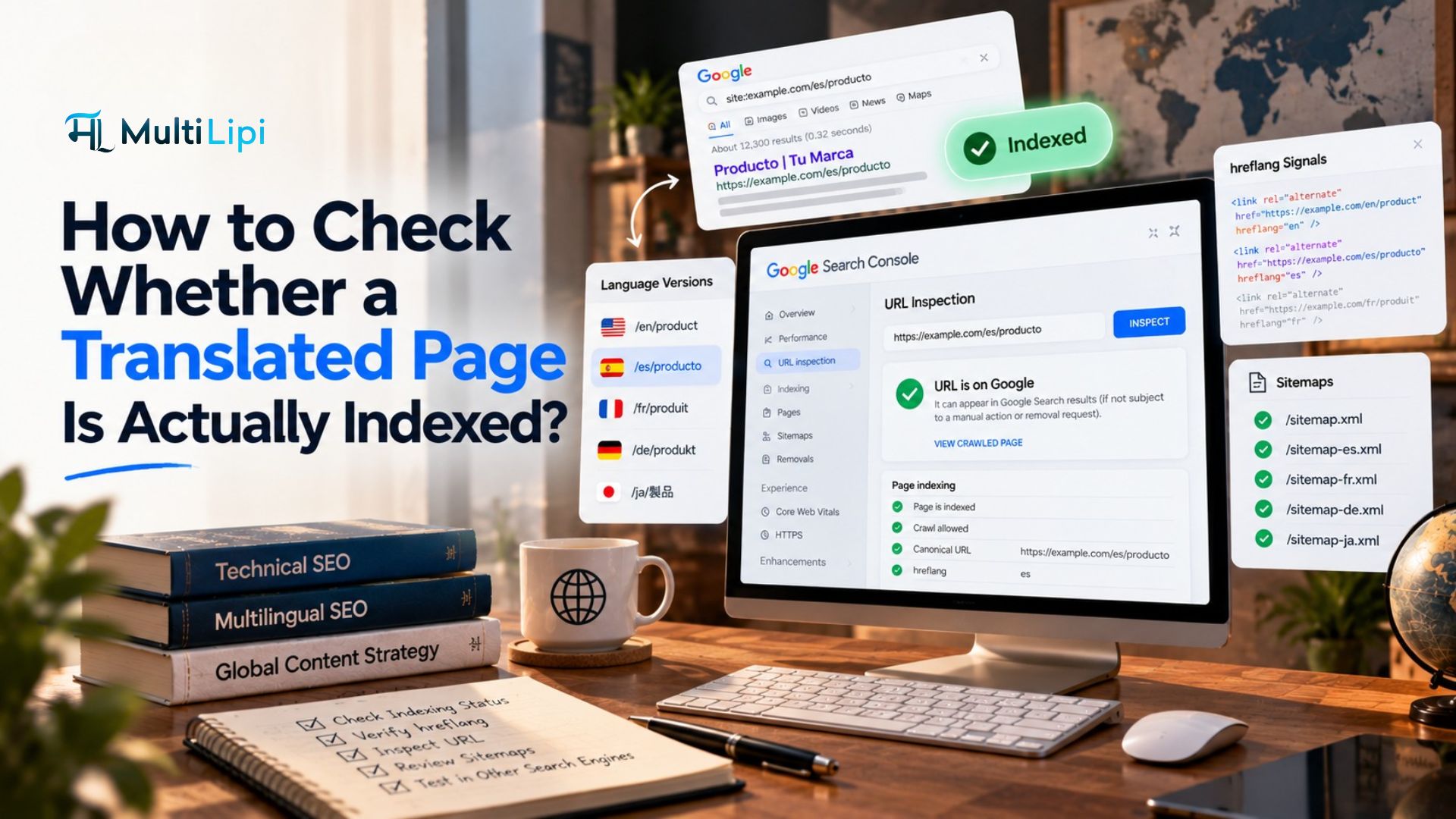
Include language variants in your sitemap with alternate references so search engines understand the full set of pages in each language. Updated sitemaps help crawl and index translated pages faster and more reliably.
Use robots.txt to control crawler access, not as a reliable way to prevent indexing. Allow search engines to crawl intended translated pages. If a placeholder page must remain out of search, use an accessible noindex directive or another appropriate index-control strategy, and avoid blocking that URL in robots.txt when Google must see the noindex tag.
How to signal language and regional targeting to search engines
Leverage hreflang attributes to connect language variants across locales. Ensure each page points to its own translations and relevant regional versions to guide users and search engines to the correct translation. Maintain a clean relationship between the canonical page and its translations if you use canonical signals, avoiding cross language confusion.
Regularly audit signals in your CMS or translations dashboard to prevent stale mappings. Keep translation status visible, so that when a translation is missing, fallback content is clearly defined and does not mislead crawlers or users.
Common Pitfalls to Avoid
Duplicate elements across languages without signaling
You can create translated pages that Google treats as separate if you signal language and locale clearly. Without proper signals, identical visuals, structure, and core messages across languages can look like duplicate content. Use hreflang attributes to link each page to its correct audience and avoid cross language indexing mistakes.
When you reuse templates or shared components across languages, check locale specific elements such as dates, currencies, and examples. Align them to the target locale to reduce the risk of perceived duplication and boost relevance in SERPs.
Ignoring localization quality and user experience
Low quality translations or literal word swaps can create thin content that hurts engagement and rankings. Invest in semantic localization that respects local terminology and reading habits. Match visuals, examples, and problem statements to regional expectations to improve usefulness.
Underestimating user intent in each language variant leads to pages that feel generic. Map common queries for the target audience and tailor introductions, problem statements, and solutions accordingly. Poor UX signals like slow loading localized assets or inconsistent navigation hurt crawlability and indexing.
- Ensure each language variant has unique, meaningful value rather than a mirror copy
- Test the user journey in every locale to confirm it meets local expectations
La estrategia de SEO internacional debe comenzar definiendo mercados y lenguajes, y asegurar que cada versión tenga un valor único y significativo para evitar duplicaciones percibidas, mientras se utiliza hreflang para conectar las variantes y orientar a los usuarios hacia la versión más relevante. , Analista de Mercado
FAQ
Do translated pages count as duplicate content?
Translated pages are not treated as duplicate content when they are accurate, localized, and exhibit content uniqueness. This is supported by Google's perception of translated content, which acknowledges that well-executed translations, whether by human translators or advanced machine translation tools, create distinct experiences in different languages. The divergence between cultural localization and literal translation plays a crucial role in this context; while literal translation can often lead to confusing or irrelevant content for target audiences, cultural localization ensures that the essence and nuances of the original message resonate with local users, enhancing SEO impact. However, the ramifications of machine translation versus human translation on SEO cannot be overlooked; while machine translation may offer speed and efficiency, it often lacks the nuance and cultural sensitivity that human translators provide. This sensitivity can significantly enhance engagement and reduce bounce rates. Effective duplicate content handling in translated sites, including the WPML content duplication mechanics, plays a vital role in this regard. Google's recognition of the uniqueness in translation underscores that well-prepared pages can coexist in its search results without facing penalties. To avoid duplicate content issues in multilingual pages, strategies such as using canonical tags, maintaining clear and targeted language versions, and ensuring each page has unique meta descriptions are essential. The WPML system enhances this by ensuring that duplicated content is managed correctly, signaling to search engines that these pages target different language audiences with distinct content rather than merely copying text across sites or locales. Additionally, fallback behavior for untranslated content plays a crucial role in multilingual sites. By providing alternative versions, such as default language content, when specific translations are unavailable, websites can maintain a seamless user experience. By emphasizing quality, meticulous cultural localization, translation effectiveness, and content uniqueness in translated pages, alongside implementing effective fallback strategies and recognizing the differing impacts of machine versus human translation, websites can confidently align with Google's perception of how translated content should be treated, ensuring each version serves its intended audience in a distinct and meaningful way.
How do hreflang signals help search engines?
Hreflang signals tell search engines which language and region a page serves. They link language variants so users see the correct version in SERPs, reducing misinterpretation and indexing confusion. Properly implemented hreflang tags can prevent cross language content from competing against each other.
When should I use canonical tags on translated pages?
Canonical tags can be used carefully in multilingual setups to indicate a preferred version when pages are truly duplicative across languages for identical content. In most cases, rely on hreflang and translate independently rather than defaulting to canonical.
What about repeating templates or shared assets across languages?
Use the same layout or assets as a baseline, but ensure language specifics such as dates, currencies, and terminology are localized. Signaling through hreflang and clear URL structures helps prevent perceived duplication.
How can I add value beyond literal translation?
Aim for semantic localization that reflects local intents, idioms, and culturally relevant examples. This strengthens usefulness and reduces the risk of thin content on secondary language pages.
What should a translations dashboard track?
Monitor translation status, language variants, and any missing pages. Keep fallback content clearly defined so search engines and users see intentional translations rather than placeholders.
Conclusion
Translating pages does not automatically create duplicate content. When signals like hreflang, proper canonical usage, and independent value in each translation are present, search engines understand language variants as distinct experiences for different audiences.
Your goal is to translate content in a way that adds local relevance rather than simply copying text. This means semantic localization, culturally aligned examples, and accurate regional targeting. With clear language signals and thoughtful translation practices, translated pages can contribute to broader reach without harming SEO.
In practice, use the translations dashboard to maintain accurate language mappings, implement language directories, and signal to Google which version serves which audience. Avoid thin content by ensuring each variant offers meaningful value beyond word-for-word translation.
- Ensure translations are independent and locally meaningful
- Signal language and region clearly with hreflang
- Respect canonical signals when pages are truly duplicative across languages
Useful MultiLipi resources for multilingual duplicate-content checks
Use these guides and tools to review hreflang, canonicals, language URLs, content quality, and international indexation.